
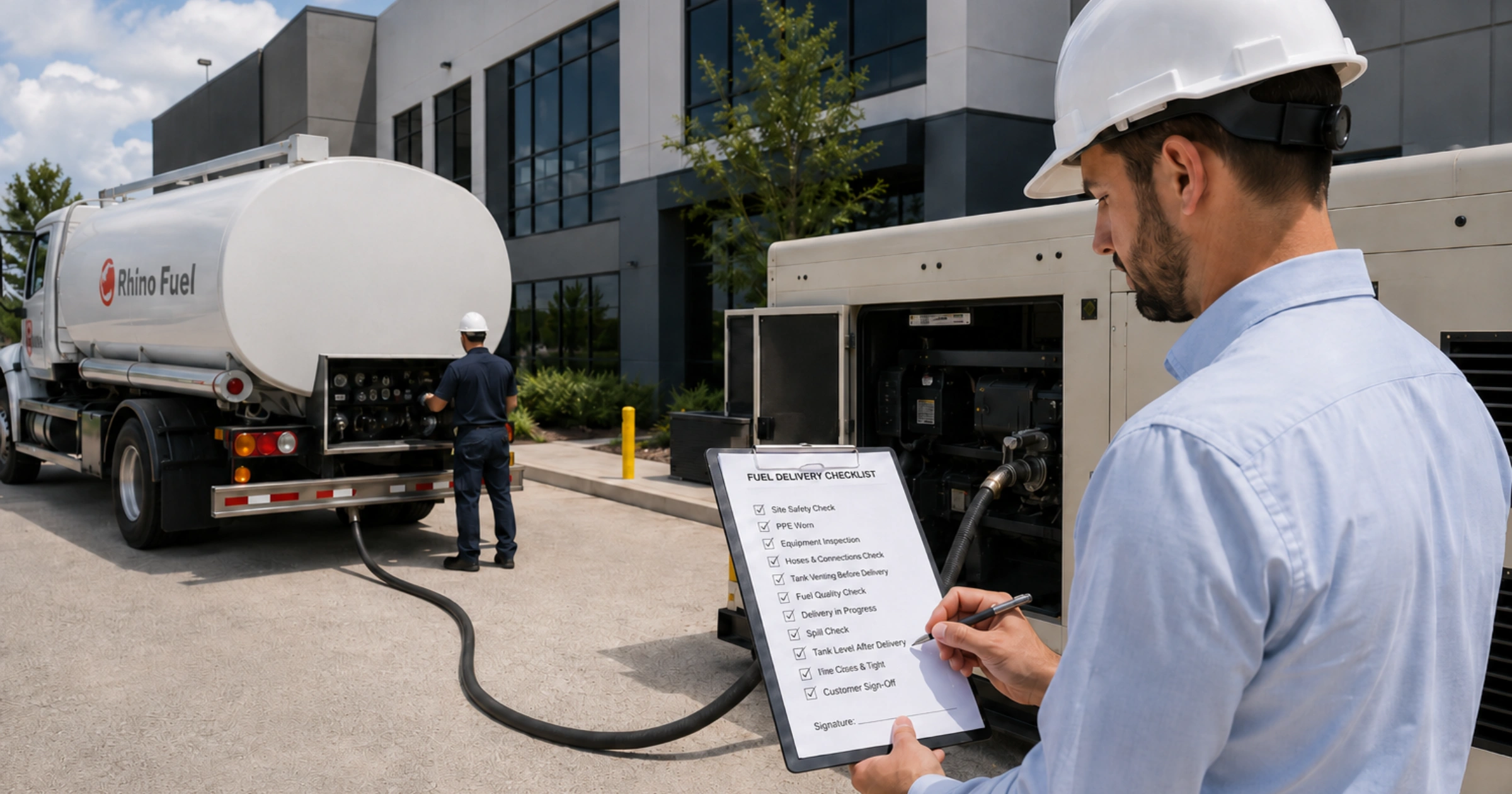
Most businesses think about their backup generator when the lights start flickering. By then, it’s often too late. Fuel may appear normal, but contamination or degradation can affect generator performance during a power outage.
That’s why a regular generator fuel checklist is important. It helps teams prepare for power outages and identify small fuel problems before they cause larger issues.
Rhino Fuel helps businesses close this gap. We handle the heavy lifting through scheduled mobile deliveries, 24/7 emergency response, and proactive fuel quality management.
This guide explains the core parts of a generator fuel checklist for commercial facilities. It covers fuel inspections, storage practices, maintenance records, and emergency fuel planning.
key takeaways
- A generator fuel checklist helps identify problems before they affect operation.
- Diesel fuel can lose quality within 6 to 12 months of storage.
- Regular fuel testing, polishing, and monitoring is crucial to maintaining quality.
- A complete checklist includes fuel testing, tank inspection, fuel delivery planning, monitoring, emergency planning, and documentation.
- NFPA 110, Joint Commission, and CMS requirements emphasize fuel inspection, documentation, and fuel supply management.
- Scheduled fuel delivery, fuel quality services, and emergency generator refueling help businesses maintain generator fuel readiness.
Why Most Generator Failures Start With Fuel
When a generator fails during an outage, the investigation usually points to the fuel tank rather than the engine. Water gets into storage tanks through condensation and poor seals. Sediments and microbial growth also follow the water and spread as a dark sludge.
Due to these contaminants, the unit runs briefly, the clogged filter starves the engine, and the generator shuts down. During Hurricane Ida in 2021, multiple commercial facilities experienced exactly this sequence. Their generators were mechanically sound, but the fuel was the problem.
In commercial operations, that kind of failure means lost revenue and potential liability. A generator fuel checklist prevents this by making fuel readiness a scheduled habit rather than a reactive scramble.
Generator fuel readiness also depends on a reliable fuel delivery plan. Understanding on-site fuel pricing helps businesses prepare before an outage. Go through our full guide to understand how on-site fuel pricing works
What Belongs on a Generator Fuel Checklist
Generator fuel management covers more ground than most teams realize. Fuel quality is the obvious starting point, but tank condition, supply levels, monitoring systems, and emergency planning each carry their own failure points. A generator fuel checklist that assesses all of these areas provides a more complete evaluation.
| Checklist Area | Problem It Prevents |
| Fuel quality testing | Contamination-related generator failure during outages |
| Tank condition inspection | Leaks, corrosion, and sediment buildup |
| Supply level management | Running low during extended outages or delivery delays |
| Monitoring system review | Missing alerts or inaccurate gauge readings |
| Emergency planning | Scrambling for fuel contacts during a crisis |
Reviewing all these five areas is crucial to create records that meet NFPA 110, Joint Commission, and CMS audit requirements.
Daily Generator Fuel Checklist Items
- Check the generator fuel level and make sure it is above the minimum threshold.
- Inspect the tanks and check for fuel odors, staining, or visible leaks.
- Review any monitoring system alerts from the past 24 hours.
- Confirm that the day tank fuel supply is within its normal operating range.
Weekly Generator Fuel Checklist Items
- Run a generator load test to check performance under actual power demand conditions.
- Inspect fuel lines and filters for wear or blockage to prevent fuel flow issues.
- Check tank vents and gauges and compare readings against monitoring data to ensure accurate fuel level tracking and proper tank breathing.
- Log current fuel levels and document any changes or anomalies noted to maintain a clear record for monitoring and maintenance.
Monthly Generator Fuel Checklist Items
- Inspect the tank exterior and containment area for signs of wear or damage.
- Cross-reference the current fuel level against what the monitoring system shows.
- Compare the generator fuel delivery schedule against actual fuel consumption for the month.
- Update the inspection log and flag any gaps or inconsistencies for follow-up.
Quarterly Generator Fuel Checklist Items
- Test day tank float switches and alarms to confirm they respond accurately
- Check the transfer pump under normal and load conditions.
- Review fuel inventory records for completeness and accuracy.
- Verify that the backup supplier’s contact information is current and that the response process is clear.
Annual Generator Fuel Checklist Items
- Perform a complete diesel fuel quality testing covering water content, microbial growth, sediment, and cetane rating.
- Schedule fuel polishing for all types of backup generators if any test result falls outside acceptable limits. This helps restore fuel quality and prevent equipment issues.
- Review and update the emergency fuel response plan, including current contacts and procedures, to ensure timely fuel supply during emergencies.
- Audit supplier agreements and confirm service levels align with current operational requirements. This is to maintain consistent generator fuel delivery.
- Verify that NFPA 110 compliance documentation is complete, properly dated, and accessible. This is important to make sure your fuel management system meets NFPA 110 fuel requirements.
The annual fuel quality test is the most important step in preventing generator failure. Generator fuel must meet fuel quality specifications to avoid unit failure issues.
Fuel Quality Items Every Business Should Check
Water content, microbial growth, sediment accumulation, and cetane number determine the fuel quality.
Water enters fuel tanks through condensation, especially when tanks repeatedly go from full to partially filled levels. Once water is present, microbes grow at the fuel-water layer and create sludge that quickly blocks filters. Sediment also forms over time due to tank corrosion and fuel breakdown.
Along with these contamination issues, fuel quality can also decline. A low cetane number leads to slow engine starts and rough performance under load. Therefore, businesses must plan for testing every 6 to 12 months.
When results fall outside acceptable ranges, fuel polishing is used to restore fuel quality. It filters stored diesel through a circulation system that removes water, sediment, and other contamination without draining the tank. EPA diesel fuel standards require businesses to perform regular fuel polishing and also use the best gas for generator storage.
Tank and Storage Items Every Business Should Inspect
Every business should inspect the following items during fuel storage to ensure compliance with safety and environmental regulations:
Above-Ground vs Underground Tanks
Above-ground tanks allow easy visual inspection and quick access. Underground tanks have lower temperature variation but require stricter reporting under the EPA Underground Storage Tank guidelines. Managers must use fuel tank monitoring systems to track performance and risks in both systems.
Key Inspection Areas
Managers must inspect containment zones, vent clearance, and gauge accuracy in all tank systems. These checks help identify contamination and prevent generator downtime during outages.
Compliance and Documentation Requirements
Businesses must document secondary containment, inspection records, and spill response procedures as a part of their SPCC Plan. Auditors review these records during compliance checks, and missing documentation may lead to compliance issues, even when physical systems remain properly maintained.
Inspection Records and Accountability
Managers must complete a written inspection record after every check. This includes the date, findings, and the name of the responsible person. These records are important to track recurring issues and improve fuel tank monitoring.
Fuel Supply Items Every Business Should Track
Fuel delivery plays a direct role in the fuel supply chain of backup power systems. Businesses should track the following fuel supply elements to maintain uninterrupted generator operation.
- Maintain fuel levels and operational reserves to support generator runtime needs during outages.
- Use scheduled fuel delivery and bulk diesel fuel supply to support consistent refueling without disruption.
- Implement automated fuel monitoring to track real-time fuel levels early.
- Maintain updated backup fuel supplier contacts for emergency fuel delivery.
Many facility operators maintain higher fuel levels as a precautionary buffer. However, NFPA 110 focuses on ensuring sufficient fuel for the required generator runtime rather than prescribing a fixed tank percentage.
Emergency Planning Items Every Business Should Document
Emergency fuel planning defines the procedures businesses use to manage fuel supply and supplier coordination during power outages. It also helps improve generator fuel readiness and operational continuity during emergencies.
Regional Risk and Supply Challenges
Regional conditions directly affect fuel availability during emergencies. Hurricane-prone areas require early fuel preparation before storms. Similarly, fuel reaches late in colder regions due to roadblocks. These disruptions increase reliance on 24/7 emergency fuel delivery to maintain operations.
Fuel Drill Testing and Emergency Readiness
Fuel drills help validate emergency procedures under operating conditions. Businesses test supplier coordination, response timing, and fuel availability during these exercises. Many organizations use FEMA Power Outage Guidance as a reference for improving emergency preparedness. These drills support generator fuel supply stability during high-demand situations.
Emergency Fuel Supplier Network
It includes coordination with suppliers, tracking consumption patterns, and preparing backup generator fuel delivery options. This planning helps prevent generator downtime and maintains operational continuity.
Read our guide on how you can efficiently fuel your backup power generators.
Compliance and Documentation Items Auditors Look For
Auditors review compliance and documentation items to verify that fuel systems follow required safety and operational rules. Auditors review the following main items during inspection and evaluation:
Runtime Documentation
Audit teams review certification papers and runtime logs that follow NFPA 110 requirements. CMS and Joint Commission surveys also examine these records during healthcare facility inspections. These records capture generator activity and compliance details for inspection and regulatory review.
Compliance Records
Inspection logs, fuel test results, and delivery records show fuel history related to storage batches. Auditors review these records to verify fuel quality, storage conditions, and maintenance history during inspections.
Maintenance Logs
Maintenance logs and load test reports record service actions and equipment performance data. This paper trail gives audit evidence during inspections and reduces compliance risks in organizations.
How to Use the Generator Fuel Checklist Across Teams
Generator fuel checklist duties are spread across teams instead of one person. Facility engineers work alongside operations, compliance, and procurement teams to manage fuel supply planning. Maintenance catches leaks early, and compliance keeps documentation audit-ready. Whereas the procurement teams arrange fuel on time and prevent fuel supply mistakes during disaster situations.
This shared responsibility connects with backup power fuel planning, where teams review fuel conditions. They also update records and prepare for demand changes during grid loss situations. This interconnected responsibility guarantees that if the main grid drops, the entire team has already verified the system can handle the load.
How a Fuel Partner Supports Your Checklist Year-Round
A dependable fuel partner handles the supply and quality side of the checklist. This enables internal teams to focus on inspections, documentation, and day-to-day operations. Scheduled bulk delivery and generator refueling maintain tank levels without requiring manual monitoring and reactive orders.
Similarly, emergency fuel delivery services work well during longer outages. A reliable fuel partner also provides fuel quality services, including testing and polishing.
During grid loss or fuel shortage, fast emergency generator refueling restores fuel supply for essential systems. Likewise, bulk fuel supply prevents generator downtime.
Frequently Asked Questions
Generator Fueling Services
What is a generator fuel checklist?
A generator fuel checklist includes fuel-related tasks for inspection, testing, storage review, and refilling. It helps teams track fuel condition, schedule reviews, and record changes so the generator receives usable fuel when demand increases.
How often should generator fuel be tested?
Generator fuel testing usually follows set intervals, such as monthly or quarterly, based on usage and storage conditions. Regular testing helps detect fuel quality issues early and supports safe generator operation.
What is the NFPA 110 fuel requirement?
NFPA 110 sets rules for emergency and standby power systems, including fuel storage, generator system preparedness, and fuel supply requirements. According to this, many critical facilities under Level 1 design require a 96-hour on-site fuel supply requirement. However, lower-risk systems may need shorter duration, such as 2 hours or 4 hours depending on classification.
How long can diesel fuel be stored before it goes bad?
Diesel fuel usually remains usable for about 6 to 12 months under normal storage conditions.
Storage time depends on temperature, water entry, and tank cleanliness. After this period, fuel can form deposits and lose quality.
Partner with Rhino Fuel for Generator Fuel Readiness
Generator fuel problems do not show up on a warning light. They develop slowly in storage tanks over months and appear during an active outage when backup power is the only option left. In such a situation, managers run to gas stations to refuel generators, but that is time consuming.
Rhino Fuel provides a better alternative through jobsite fuel delivery services. We deliver fuel directly onsite so you do not have to rush to gas stations, which takes extra effort and affects business performance.
You can contact Rhino Fuel for fleet fueling services at any time. Find a location near you and order fuel today.