
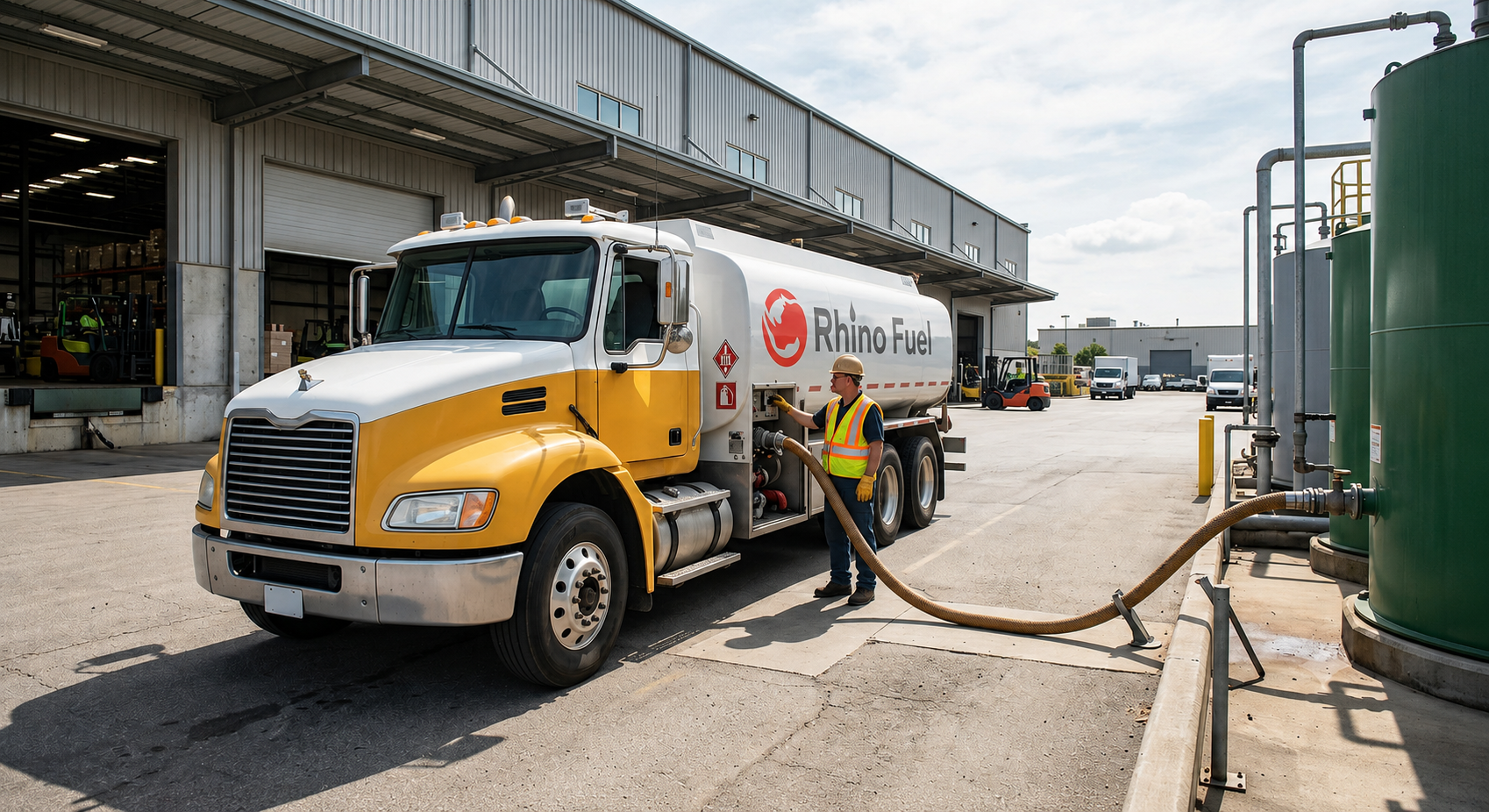
Many companies often purchase diesel without a plan. They disregard the reality that fuel expenses change quickly and that supply problems could materialize occasionally. Therefore, companies need a good bulk diesel purchasing plan to control expenses, guarantee timely fuel delivery, and prevent last-minute shortages.
It can be defined in terms of understanding usage, selecting the most appropriate pricing method, building relationships with dependable suppliers, and planning deliveries correctly. This guide explains this strategy step by step, including fuel forecasting, supplier selection, and scheduling fuel deliveries. It also includes fuel quality checks and building supply stability to help businesses reduce risk and operate productively.

Key Takeaways
- To control diesel expenses, mitigate diesel supply shortages, and manage price fluctuations, it’s better to buy in bulk.
- One of the best approaches is to predict demand, set a suitable price, and coordinate with dependable suppliers.
- Scheduled deliveries, monitoring, and proper storage improve productivity and reduce the risk of shortages.
- Having backups, quality control, and supply planning helps minimize disruptions and downtime.
- Long-term partners like Rhino Fuel make fuel management easier with dependable delivery and better reporting.
Why a Bulk Diesel Purchasing Strategy Matters More Than Ever
Fuel prices may shift based on geopolitical events, politics, and other supply chain problems. Taxes also have a big role in fuel costs in many countries. As diesel prices increase, so does the transport fare, which drives up the cost of goods, putting strain on businesses and consumers.
Failing to make the right decisions when purchasing fuel can also result in losses. For example, airlines that had locked in higher fuel prices via hedging suffered great losses when the oil prices dipped sharply in 2014. Delta Air Lines lost roughly $2.3 billion in 2015, while United Continental lost around $960 million on its hedge contracts. American Airlines, meanwhile, had stopped hedging in 2014 and profited from the reduced fuel expenses.
Thus, businesses should treat diesel as a managed cost rather than a fixed expense. This can include fixed-price contracts or price caps to minimize budget risk, and the use of market data to purchase at a more opportune time. It also includes making better use of routes, managing fuel, and reducing idle time to improve productivity.
Step 1: Forecast Your Bulk Diesel Consumption Accurately
Current tracking systems report fuel consumption, including actual fuel usage per equipment, engine hours, and idle time. This aids in identifying waste and improving productivity.
Fuel demand also changes with seasons and operations, like higher use in summer or during busy periods. Forecasting tools use past data and trends to estimate future bulk diesel purchasing needs. Using historical data and growth plans also helps improve accuracy, fuel supply planning, and avoid fuel shortages or overstocking.
Step 2: Choose the Right Pricing Model for Your Business
Picking the right bulk pricing model for your business is a core fuel-purchasing strategy that balances cost certainty with the opportunity for market savings. Here are 3 price models to choose from:
| Pricing Model | How It Works | Best For |
| Fixed Pricing | Locked price for the contract period, protects against market changes | Businesses needing stable costs and predictable budgets |
| Indexed Pricing | Price changes with market benchmarks like OPIS or EIA | Companies that can handle risk and want to benefit from price drops |
| Hybrid Pricing | Mix of fixed and market-linked pricing | Businesses wanting both stability and flexibility |
Fixed pricing is best for businesses that need stable and predictable fuel costs. It protects against price increases and makes budgeting easier, but you won’t benefit if market prices fall below your locked rate. It also needs accurate forecasting, and many fuel contracts include take-or-pay terms. This means you still pay for the agreed volume even if you don’t use it.
Indexed pricing follows the market rate and a fixed margin. Prices move up or down based on benchmarks such as OPIS (Oil Price Information Service) and the EIA (U.S. Energy Information Administration). It offers more transparency and possible fuel cost management when prices drop, but also higher costs when prices rise.
Hybrid pricing combines both, with part of the fuel fixed for stability and the rest linked to the market for flexibility. This fuel procurement strategy is gaining in popularity, as it delivers fuel price security alongside the benefit of capturing market opportunities.
Step 3: Select a Reliable Bulk Diesel Supplier
A dependable bulk diesel supplier is a strategic partner for diesel fuel procurement. Here are some considerations to make when selecting one:
- A good supplier will be on hand 24/7 and respond rapidly to outages to minimize downtime.
- Opt for a supplier who has good logistics and access to multiple terminals to ascertain bulk diesel supply at all locations.
- Prices should be clear and exclude any hidden charges, while suppliers should provide documentation, such as Certificates of Analysis (CoA), to verify fuel quality.
- Determine that fuel complies with standards such as ASTM D975 or EN 590 and is periodically examined for quality characteristics, including contamination and sulfur content
5. Verify that the supplier is accredited and possesses ISO 9001 and ISO 14001 certifications to ascertain quality and environmental responsibility.
6. Large suppliers must be able to coordinate and manage fuel deliveries at various locations productively.
Step 4: Build a Scheduled Fuel Delivery Plan
A scheduled fuel delivery plan helps businesses move from emergency buying to a more planned and fruitful approach. Instead of ordering fuel at the last minute, periodic bulk diesel delivery can help reduce expenses and avoid shortages, keeping operations functional without delays.
The time between refueling should be determined by diesel consumption, fuel remaining in the tank, and accurate demand forecasting to ascertain a steady supply without depletion. With fuel monitoring systems that automatically track fuel usage, such as tank gauges, businesses can monitor fuel levels in real time. Next, they can improve fuel demand forecasting, resulting in more accurate delivery times.
Step 5: Plan for On-Site Storage and Tank Management
A good on-site fuel storage strategy guarantees a steady supply, safeguards diesel, and adheres to environmental rules. Your tank should be big enough to meet your diesel usage, emergency needs, and supplier delivery time without costing you money on excess storage.
There are two main tank types. Above-ground tanks (ASTs) are easier to check and maintain. While underground tanks (USTs) are more protected, they’re also harder and more expensive to install and monitor.
Rules also matter. The EPA’s SPCC rule requires inspections, safety measures, and staff training, alongside strict leak and spill-prevention standards. OSHA, on the other hand, controls ASTs under 29 CFR 1910.106 for the safekeeping of flammable and combustible liquids. USTs are subject to the HAZWOPER standard during leak investigations, cleanup operations, corrective measures, and emergency response.
Furthermore, since water, dirt, and microorganisms could harm fuel, good tank maintenance is crucial. Periodic examinations, and cleaning help maintain fuel purity and lower equipment damage and maintenance expenses.
Step 6: Use Fuel Monitoring and Quality Controls
Automated tank monitoring relies on sensors to track fuel levels and send alerts when diesel is depleting. This improves fuel delivery planning and prevents emergencies.
In addition, fuel should be examined regularly to ascertain that it complies with ASTM D975 standards, particularly when it is aged beyond six months. This makes certain it’s not contaminated.
Moreover, fuel polishing will not only clean the diesel but also remove water, sludge, and microbes, helping prevent fuel-related engine issues such as fuel filter clogging. Combined quality control and monitoring help improve fuel quality, prolong equipment lifespan, and minimize downtime.
Step 7: Build Supply Resilience Into Your Strategy
Backup suppliers are an important part of a strong fuel budget planning strategy during emergencies. They give an alternative source if the main supplier fails, and using different routes and sources across multiple sites helps reduce risk from supply chain weak points.
Pre-arranged emergency bulk fuel purchasing contracts with suppliers that have contingency plans also guarantee fuel supply during crises. But businesses have to improve supply resilience by identifying operational vulnerabilities, conducting a disruption assessment, and developing backup options for supply, storage, and energy sources.
Common Bulk Diesel Purchasing Mistakes to Avoid
Avoiding frequent mistakes when purchasing bulk diesel is just as important as following a strategic plan. Overlooking any of these areas can quickly decimate your profits:
- Supplier Dependability: Lowest price buying can result in inferior quality of diesel, wrong orders, and delays. So, focus on dependable, certified suppliers instead.
- Tank & Fuel Maintenance: Ignoring fuel/tank condition leads to contamination and engine damage. Regular evaluation, inspections, and fuel cleaning help maintain quality.
- Demand Forecasting: No planning or forecasting causes shortages or excess fuel. So, use past usage and seasonal trends to plan properly.
- Record Accuracy: Poor fuel records can lead to billing mistakes and overcharging. So, always track deliveries and review invoices.
- Consistent Fuel Management: One-time fuel management increases risk and inefficiency. Thus, use consistent monitoring, planning, and control systems.
How to Measure the Success of Your Bulk Diesel Purchasing Strategy
To measure the success of your fuel strategy, track these crucial metrics. They provide the data needed to move from a reactive cost center to a managed, strategic expense:
- Fuel Price Competitiveness: Compare cost per gallon against market prices, such as EIA or OPIS, to see if you are being fairly priced.
- On-Time Delivery Rate: Monitor on-time delivery rate (95%+), as delayed deliveries can result in additional costs and downtime.
- Delivery Planning: Keep track of emergency and scheduled deliveries. More emergency orders usually mean poor planning and higher costs.
- Fuel Quality Compliance: Check fuel quality reports and Certificates of Analysis to ascertain that standards, like ASTM D975 or EN 590, are met.
- Fuel Cost Share: Measure fuel charge as part of the total expense to assess overall cost-control performance.
- Fuel Downtime: Monitor fuel downtime and strive to keep it to nearly zero.
How to Choose a Long-Term Bulk Diesel Partner
Choosing a long-term bulk diesel partner is an important business decision. Here are the important questions to ask when selecting one:
- Where do they deliver? How quickly do they deliver, and can they serve multiple/remote sites?
- Are their prices clear? Do they have fixed prices and volume discounts? Do they charge transparent fees?
- Are they able to issue Certificates of Analysis and evidence confirming that the diesel complies with specified standards, such as ASTM D975? What do they do to avoid contamination?
- Do they have overnight delivery available, and how fast are they able to respond in emergencies?
- Are drivers trained, and do they adhere to EPA regulations and certifications (ISO 9001, ISO 14001)?
- Do they offer digital tracking, fuel reports, or real-time inventory info?
Being able to coordinate with a single long-term fuel supplier rather than multiple ones is easier and more productive for managing fuel. It simplifies paperwork because you have a single billing system and a single delivery schedule. So, you might be able to slash costs through bulk purchasing and better overall deals.
Rhino Fuel is, as such, one dependable supplier that offers greater service uniformity, assurance of compliance, and accountability for fuel usage.
Frequently Asked Questions
bulk diesel purchasing
How do you forecast bulk diesel consumption?
The first step is to look at previous fuel consumption to find patterns and trends. Forecasting also accounts for seasonal, project schedule, and operational changes to better predict future fuel requirements.
What is the difference between fixed and indexed diesel pricing?
Fixed pricing means that you are guaranteed a specific fuel rate for the duration of the contract, avoiding price volatility and budget instability. Whereas indexed pricing fluctuates with the market, and can be beneficial when prices go down (you pay less), and detrimental when prices go up (you pay more).
How much diesel should a business buy in bulk?
Your fuel use, storage capacity, and delivery schedule will all help to determine the appropriate bulk diesel amount. Most companies keep enough gasoline for everyday use, along with a safety reserve for crises.
Partner with Rhino Fuel for Bulk Diesel Purchasing
Bulk diesel purchasing is most advantageous when you coordinate with a trustworthy fuel provider. With planned and emergency deliveries, clear pricing, and countrywide reach, Rhino Fuel enables companies to keep ahead of demand and prevent expensive downtime.
Call Rhino Fuel right now if you’re ready to simplify fuel management and seize control of your diesel plan. is best when you coordinate with a dependable fuel supplier. Order mobile fuel delivery to keep your fleet and equipment functional.