
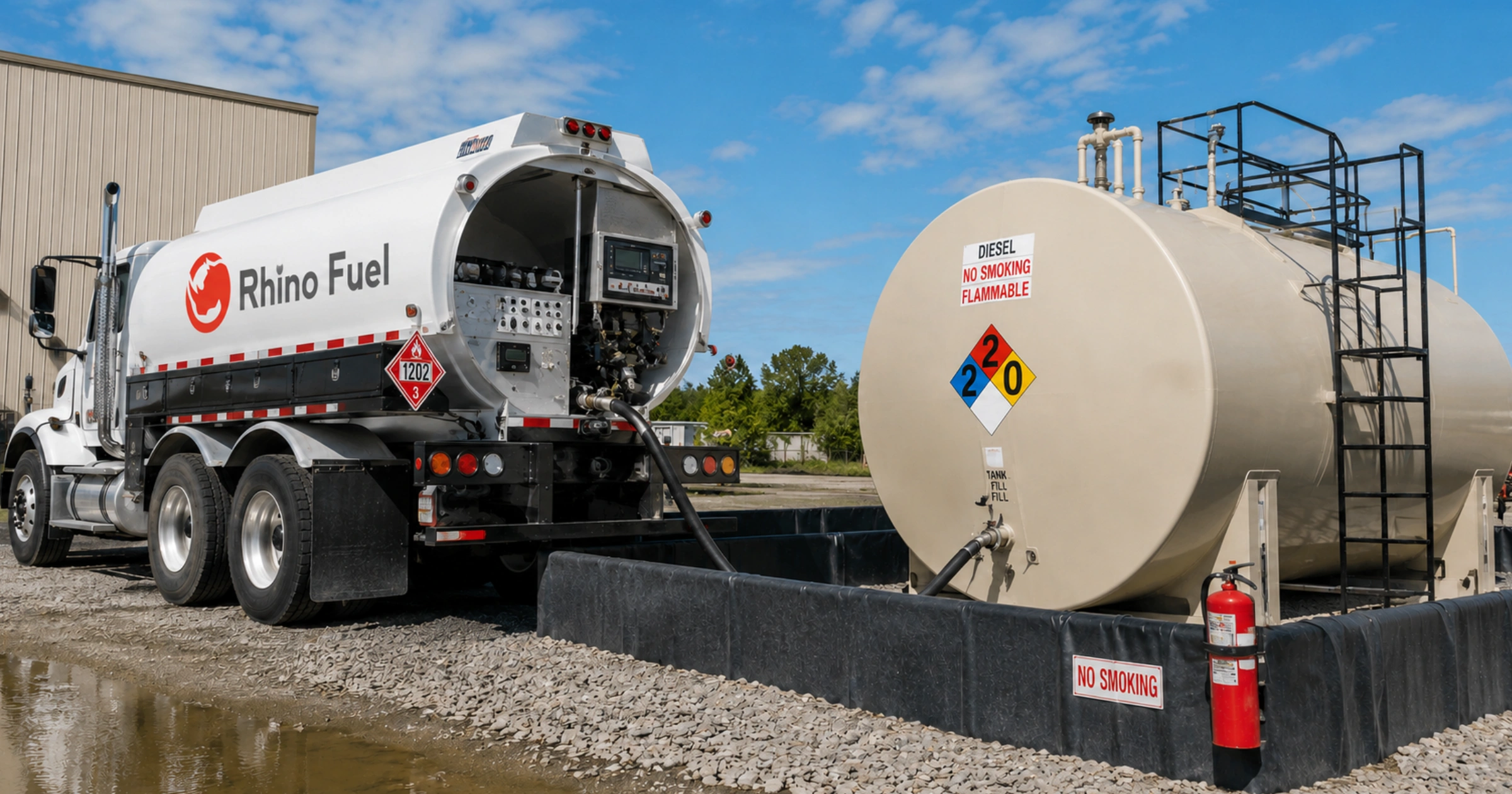
Could one wrong decision during a bulk fuel tank installation cost your business thousands of dollars? Many companies focus on the tank and overlook permits, site selection, storage capacity, and fuel access. Those decisions can create expensive changes after the installation.
A bulk fuel tank does far more than store fuel. Businesses use these tanks for fleets, generators, equipment, and job sites. Tank type, material, location, compliance rules, and maintenance all affect fuel storage and day-to-day fuel planning.
This guide explains the main points every business should review before installing a bulk fuel tank. You will learn about tank options, sizing, compliance, and maintenance. Besides this, Rhino Fuel also helps businesses plan fuel storage and fuel delivery through trusted fuel services.
Key Takeaways
- Plan your bulk fuel tank installation before any work takes place. Tank size, material, type, and location affect cost, fuel storage, and site requirements.
- Compare above-ground and underground tanks before you decide. Available space, fuel capacity, project goals, and budget all affect the best option.
- Follow fuel storage rules during the installation process. Federal and local requirements affect tank placement, secondary containment, and paperwork.
- Inspect the tank and check fuel quality on a regular schedule. Tank monitoring and fuel polishing help protect fuel quality and equipment performance.
- Consider a tank rental if you do not want a permanent installation. Rhino Fuel offers rental programs for temporary projects and changing fuel demands.
What Is a Bulk Fuel Tank and Why Businesses Install One
A bulk fuel tank stores diesel or gasoline at a business site for daily fuel use. Many businesses install it to fuel vehicles, equipment, or backup generators from a central location. This includes construction, healthcare, agriculture, manufacturing, logistics, and commercial real estate.
At the same time, a bulk fuel storage tank helps lower fuel costs and reduce refueling trips. It also helps managers track fuel use at each site. Many businesses choose this setup when fuel demand remains high throughout the week.
Businesses should also have a good understanding of what to know before buying bulk fuel. This helps secure a large quantity of fuel at the best rates.
Above-Ground vs. Underground Fuel Tanks: Which Fits Your Site?
Here is a complete comparison between above-ground and underground fuel storage tanks:
| Factor | Above-Ground Tank | Underground Tank |
| Installation Cost | Lower upfront cost and less site work | Higher upfront cost due to excavation and installation |
| Installation Time | Usually takes less time to install | Installation may take longer because of ground work |
| Space Use | Uses open ground space | Frees up surface space |
| Inspections | Tank condition is easy to check during routine visits | Inspection usually involves specialized equipment and testing |
| Maintenance Access | Parts and tank surface are easy to reach | Access may require excavation if major repairs are necessary |
| Regulations | Must follow NFPA 30, OSHA, and applicable EPA requirements | Subject to strict EPA Underground Storage Tank rules, along with local regulations |
| Tank Replacement | Replacement is generally less complicated | Replacement usually involves excavation and higher costs |
| Common Use | Construction sites, farms, warehouses, fleet yards, and many commercial properties | Properties with limited surface space or projects that prefer the tank out of sight |
| Best For | Businesses that want lower installation costs and easy access for inspection and maintenance | Sites where available space or property appearance carries higher priority |
An above-ground fuel tank suits sites with open space and easy access for inspection, maintenance, or replacement. An underground fuel tank suits properties with limited surface space or projects that place the tank below the ground.
Businesses can also choose different tank materials based on site conditions and fuel use. Steel offers high strength, fiberglass resists corrosion, and polyethylene suits many smaller fuel storage systems. Moreover, secondary containment provides a second barrier that collects fuel if a leak occurs.
Problems can continue even after tank installation if a supplier misses deliveries, offers poor service, or cannot provide fuel during emergencies. These issues can affect fuel supply and business operations.
If these problems occur again and again, they may be signs that it is time to switch wholesale fuel suppliers.
How to Choose the Right Bulk Fuel Tank Capacity
Fuel use depends on generator size, fleet count, or equipment use. That estimate gives a good starting point for bulk fuel tank capacity. Tank options usually include 500, 1,000, 2,000, 5,000, and even 10,000+ gallons. Each size suits a different level of fuel use.
Many companies select a tank that holds about two weeks of normal fuel use and also leaves room for emergency demand. Buying an on-site fuel tank requires careful planning. So, review its size, storage capacity, safety features, and site requirements.
EPA and Federal Fuel Tank Regulations Businesses Need to Know
EPA fuel tank regulations apply to many underground storage tanks that contain hazardous petroleum products, like diesel. These EPA rules cover leak detection, corrosion protection, tank testing, and recordkeeping.
Above all, some sites fall under the SPCC regulations. These regulations apply to facilities that store more than 1,320 gallons of oil above ground and meet EPA location criteria. An SPCC Plan explains spill control measures and fuel handling practices, and also covers secondary containment requirements.
Federal rules do not stop there. OSHA rules cover flammable liquid storage, employee safety, fire protection, and hazard communication. At the same time, NFPA 30 gives guidance on tank spacing, containment, fire protection, and tank location. Many designers and local officials use this standard during project review.
State, county, and city rules may include permit, inspection, or fire code requirements before tank installation. Local agencies may also ask for site plans or approval before fuel storage begins. A review of every rule before construction helps avoid delays after the project starts.
Site Planning and Location Considerations
Fuel tank placement must follow specific spacing and safety requirements. OSHA states that two aboveground flammable-liquid tanks must have at least 3 feet distance between them. Certain tank setups also require specific distances from property lines and nearby structures.
Tank loading areas also have spacing requirements. OSHA lists distances of 25 feet or 15 feet for certain loading areas. The required distance depends on the fuel category and site setup.
SPCC requirements focus on spill control rather than fixed tank-to-building distances. Bulk storage tanks must have secondary containment for the largest single tank. The containment area must also allow space for precipitation.
Local fire codes can set additional requirements. Businesses should review federal, state, and local requirements before fuel tank installation.
Secondary Containment Requirements Explained
Secondary containment requirements refer to a barrier around a fuel tank that holds fuel if a leak or tank failure occurs. Common options include a double-wall tank or a dike built around a single-wall tank. A double-wall tank has built-in containment, while a dike surrounds a single-wall tank to hold leaked fuel.
SPCC rules require secondary containment for the full capacity of the largest bulk storage container, along with freeboard for rainfall. A facility may also use one containment area for several containers if it meets SPCC requirements. Regular inspection and monitoring help identify damage, cracks, or blocked drainage before a spill spreads.
Bulk Fuel Tank Materials and Construction Options
Bulk fuel tanks are made from different materials, and each material offers value along with trade-offs. Steel tanks that meet UL 142 offer strong durability and a lower purchase cost. However, steel may rust over time if coatings wear away.
Similarly, double-wall steel tanks that meet UL 2085 include a second protective layer and suit sites with strict compliance rules. However, this design usually comes with a higher purchase and installation cost. Whereas fiberglass tanks can offer good corrosion resistance and are used for underground petroleum storage.
Buy vs. Rent a Bulk Fuel Tank
Buying a tank gives full ownership, though the upfront cost can feel high. Businesses can also rent bulk fuel storage tanks for short-term projects. Fuel tank rental suits projects with a fixed timeline or changing fuel demand.
The final choice depends on budget, project length, and fuel use. Tank selection is only one part of the decision. A bulk diesel purchasing guide can also help businesses understand fuel purchasing before they place an order.
Managers can contact Rhino Fuel for bulk diesel delivery at competitive prices and fuel tank rentals.
Bulk Fuel Tank Maintenance and Long-Term Care
Fuel quality depends on regular fuel tank maintenance and good record keeping. Inspect tanks, vents, and gauges on a planned schedule, then note each inspection, fuel delivery, and test result in one log. Try to maintain about ninety percent fuel in a bulk fuel storage tank during storage because this helps reduce condensation.
Moreover, test fuel every six to twelve months and arrange fuel polishing if contamination appears. A monitoring system helps track fuel levels and point out unusual changes. Cleaning the tanks every five to ten years is also important to protect fuel quality and extend tank service life.
Learn how to maintain and inspect fuel storage containers to protect fuel quality and tank condition.
How Bulk Fuel Delivery Fits Into Your Tank Installation Plan
Fuel tank installation and fuel delivery should form part of the same plan. The tank size should suit the site’s fuel demand and delivery schedule. A planned bulk fuel delivery schedule can help businesses fill the tank at the right time.
Emergency fuel delivery also has an important role during power loss or other urgent situations. A supplier with 24/7 fueling service can provide fuel during urgent supply problems. Moreover, delivery reports and account updates can provide records of fuel orders and deliveries.
Rhino Fuel also helps manage bulk diesel fuel supply for industrial operations. Our team handles installation planning and fuel supply through one point of contact.
Mistakes to Avoid When Installing a Bulk Fuel Tank
The following are common mistakes to avoid when installing a bulk fuel tank.
Choosing the Wrong Tank
Some businesses choose the lowest-priced tank and ignore local rules. Check tank standards before purchase. A wrong choice can create issues later.
Poor Site Planning
Tank location matters during fuel delivery. Poor planning can make access difficult for delivery vehicles and create delays.
Wrong Fuel Estimates
Estimate fuel use before selecting tank size. A small tank may cause frequent refills, and a large tank may add extra costs.
Missing Containment
Secondary containment helps protect the area around a bulk fuel tank. Follow safety rules and select proper containment options.
Delayed Maintenance
Do not wait for faults before planning tank care. Regular checks help find issues early and protect the equipment.
How Rhino Fuel Supports Bulk Fuel Tank Installations
Rhino Fuel helps businesses fuel delivery around their bulk storage tanks. Our services include scheduled bulk fuel delivery, on-site fueling, and 24/7 emergency fuel delivery. We also provide tank rentals for sites that need temporary fuel storage.
Fuel supply can continue after tank installation through scheduled refills and on-site fueling. Rhino Fuel also offers fuel polishing, tank monitoring, and diesel fuel quality reports. Our services give facility teams useful records for fuel management and compliance.
Managers can contact Rhino Fuel to discuss bulk fuel delivery, fuel tank rentals, or on-site fueling for their facility. Our team can help plan the fuel service based on the site’s tank and fuel requirements.
Frequently Asked Questions
bulk fuel tank
What are the basic requirements for installing a fuel tank?
A fuel tank installation requires site approval, proper space, safe tank placement, correct equipment, and local code checks. Businesses require trained technicians and regular tank inspections to manage fuel storage safely.
What are the OSHA rules for fuel storage?
OSHA rules for fuel storage focus on safe tank placement, proper labeling, fire prevention, and approved storage containers. Businesses must follow storage limits, maintain safe distances, and use suitable equipment based on fuel type and site conditions.
How much is labor to install a fuel tank?
Labor costs for fuel tank installation depend on tank size, equipment, and local labor rates. Tank installations can cost about a few hundred dollars to a thousand dollars in labor. The cost may increase when the site requires extra preparation or special equipment. Businesses can ask installers for a detailed quote.
How long is gas good for in a bulk tank?
Gas in a bulk tank can be usable for about 6 to 12 months when stored in proper conditions. Tank checks and fuel care help protect fuel quality and reduce issues from storage
Partner With Rhino Fuel for Bulk Fuel Solutions
Need a better way to manage fuel supply for your business? Rhino Fuel provides fuel delivery services for companies that require reliable fuel access. On-site fueling services are available for large-scale industries and agricultural sites. We also provide bulk fueling services for industrial generators to help prevent downtime.
We operate in many locations throughout the United States. Our team helps businesses manage bulk fuel storage and plan fuel supply for job sites, fleets, and emergency backup systems.