
Cold-chain fleet operations are facing increasing fuel prices. Through a combination of diesel and electricity, hybrid reefer units conserve fuel in some instances. For instance, when they are at rest or when the demand is low. Thus, if you compare traditional diesel vs. hybrid reefer units, the latter are more appealing. However, switching is not always easy. What might sound good in theory might not be the same in reality when managing tight schedules and stringent cold-chain requirements.
Increased initial expenses, maintenance, and reefer fuel delivery or charging requirements may impact day-to-day operations. Therefore, fleet managers and owners must learn the extent to which hybrid reefer units can provide benefits and areas where they might fail. In this blog, we’ll discuss the advantages and disadvantages of hybrid reefers to help make a judgment on whether switching is practical for cold-chain operations. You can also protect perishable goods with dependable reefer fueling from Rhino Fuel to keep food safe. Get started today!
key takeaways
- Hybrid reefer units have the capability of reducing fuel consumption when idle or at low demand, yet the savings are dependent on route and operating hours.
- They’re also more expensive to set up and more complicated, and thus, they don’t support all fleets.
- On the other hand, diesel reefers can be used extensively due to the dependability they offer in long routes or demanding schedules.
- But whichever the type, fleets require dependable access to fuel and after-hours services.
Why Reefer Technology Choices Matter More Than Ever
Picking the appropriate reefer technology is more critical than ever for reefer unit reliability due to increased cost, greater regulation, and increased risk in the supply chain. Refrigerated transport is now technological and not merely a cooling process since it has a direct bearing on the profits, compliance, and day-to-day operations. The price of fuel and energy has been rising, and industrial electricity has been the priciest in years. Truckload rates, as well as refrigerated ones, are also likely to increase, and there is little room to wait due to a shortage of drivers and tight delivery schedules.
There is also increasing environmental pressure. The reefer units usually use diesel generators, which consume more fuel and produce more emissions. Idling alone wastes millions of tons of emissions year after year. To minimize this, fleets are currently implementing idling-reduction technologies, including auxiliary power units, battery-based systems, and electrified parking. They are also implementing more intelligent monitoring devices that reduce energy consumption and also promote tougher emission regulations.
Moreover, failure of cold chain fleet operations remains a serious risk. Any single temperature fluctuation can spoil a whole consignment of food or pharmaceuticals, incurring loss of money, regulatory fines, and an increase in insurance premiums. Such failures also contribute to waste globally because an average of one-third of all food produced goes to waste or is lost. However, reefer technology nowadays can provide temperature monitoring 24/7, real-time notifications, and remote controls. It also offers automated records that facilitate compliance with regulations such as the U.S. Food Safety Modernization Act (FSMA).
How Hybrid Reefer Units Change Fuel Consumption Patterns
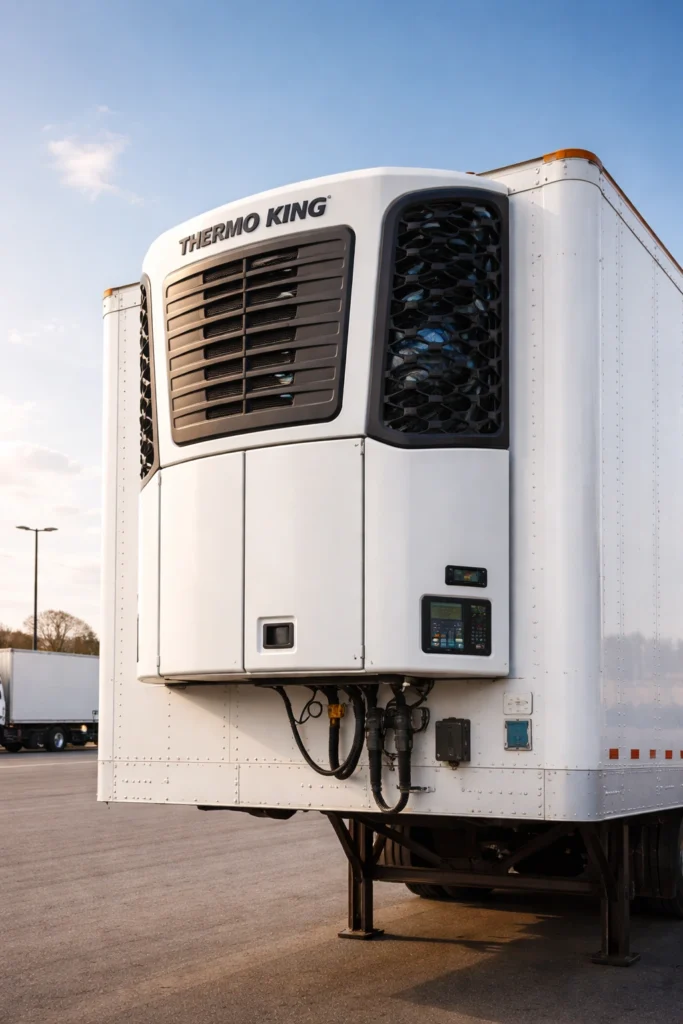
Hybrid reefer units contribute to efficient reefer fuel management. They do this by reducing the consumption of fuel and emissions through automatic switching between electricity and diesel power. Trailers operate on electric shore power when parked or waiting, eradicating the use of diesel over long periods, such as overnight staging or loading, or pre-cooling. When the trailer is on the road, the system activates the diesel to retain the temperature during transit.
In a comparison of diesel vs. hybrid reefer fuel needs, an average diesel reefer will burn about 0.8 gallons of diesel fuel per hour in the idle state. This amounts to over three gallons in a four-hour stop. Whereas hybrids lessen this fuel use by relying on electricity. Pre-cooling, which can take several hours and is required before loading, is also done on electric power. While driving, hybrids still use diesel, but fewer idle hours reduce the total fuel use and help extend engine life.
However, diesel remains a critical backup because electric power depends on available shore connections. In case power is unavailable or the trailer requires moving during cooling, the unit is set to operate on diesel automatically. This helps reduce temperature loss and protects sensitive cargo, such as food and pharmaceuticals.
Where Hybrid Reefer Units Perform Best
Hybrid reefer units are most effective in operations where electric power can replace diesel for long periods. They function well for urban delivery routes with frequent 15–30 minute stops, switching to silent, zero-emission electric mode to slash fuel use and meet city emission rules.
Moreover, they perform best when refrigerated fleet operations have predictable schedules and access to shore power. Examples include 4-hour pre-cooling at distribution centers, overnight parking for 8–12 hours, or staging while waiting for loading. Using grid electricity for most of this time increases reefer efficiency by saving fuel and reducing engine wear.
Electric mode also makes hybrids ideal for noise-sensitive locations. This includes nighttime deliveries to stores or restaurants, hospitals, university campuses, and farmers’ markets, where diesel noise and emissions can be disruptive.
Situations Where Hybrid Reefer Units May Fall Short
Hybrid reefers aren’t ideal for every operation, as their efficiency depends on predictable shore power access. In long-haul routes, trailers spend the majority of the time on the road or at truck stops with no plug-in points, thus requiring hybrids to operate fully on diesel. When this happens, hybrids behave like the standard reefers but with an addition of weight, price, and complexity, and therefore, ROI becomes more difficult to warrant. They also struggle with high-demand temperature control, which can cause cold chain disruptions.
Ultra-frozen goods (e.g., pharmaceuticals or specialty foods at -25°F or below) and precision-sensitive cargo like vaccines need continuous, dependable power. But electric mode can’t always deliver, resulting in reefer reliability risks. So, diesel becomes the primary source. Emergency situations further limit hybrids. During disasters, unexpected delays, detours, or facility power outages, electric mode may be unavailable, leaving diesel as the only dependable option.
Cost Factors Beyond the Purchase Price
Choosing hybrid reefer units requires looking beyond the purchase price to their Total Cost of Ownership (TCO). They cost more upfront than standard diesel units due to the dual powertrain, battery system, and advanced components. But they can save money over time through lower fuel use and less diesel engine wear. By running on grid electricity during stationary periods, loading, unloading, or overnight parking, hybrids cut reefer operating costs by slashing idling fuel consumption and extending engine life.
Fleets with predictable, long dwell times see the fastest payback, while mostly on-the-road operations benefit less. Hybrids reduce the operating expenses of the reefers by consuming grid electricity when stationary, loading, unloading, or parking overnight. They reduce idling fuel consumption by making engines last longer. Fleets that have predictable and long dwell times get the fastest payback, but on-road operations receive less advantage.
Fleet maintenance planning for hybrids is more complicated because technicians need training on high-voltage batteries, electric motors, inverters, and control systems. Certain repairs will also demand OEM-certified service facilities, which can be both expensive and inconvenient. Downtime risk also changes. While diesel engines run fewer hours, hybrids add potential failure points in the electric system. The repairs can be delayed by special components and the unavailability of technicians. However, the diesel engine offers a full backup that will keep the unit operational, as well as ascertain the safety of cargo in case the electric system collapses.
Fuel Supply Realities for Hybrid Reefer Fleets
Even with hybrid technology, a dependable reefer fuel delivery is critical. Diesel powers the trailer on the road and serves as emergency reefer fueling backup if electric mode or shore power fails. It also provides the high, consistent output needed for extreme cooling, such as -25°F pharmaceuticals or hot-weather operations. In hybrids, diesel is crucial for operational dependability.
Reefer unit fuel management is more complex in hybrid fleets. Electric mode reduces the amount of diesel used. Therefore, consumption is not predictable, and the probability that it will run out during times of diesel-only consumption is high. Fleets might require more frequent and smaller top-offs, and the quality of fuel is extremely important in order to safeguard sensitive engines and emission systems.
Moreover, emergency and after-hours reefer fueling needs careful planning. Hybrids must run continuously, so any fuel shortage can cause cargo loss. Specialized 24/7 providers are often needed for quick, safe diesel fuel delivery for reefer units during delays or breakdowns.
Questions Fleet Managers Should Answer Before Switching
Switching to a hybrid reefer fleet requires assessing if your operations match the technology’s strengths. Three questions can guide this reefer technology evaluation:
Do your routes support hybrid benefits?
Fuel and emission savings happen only when trailers spend significant time parked at powered locations for pre-cooling, overnight depot parking, or long customer dwell times. Fleets with mostly on-the-road trailers and short, unpredicta
How dependable is diesel access?
Diesel remains the crucial backup. So, fleets in remote areas, with irregular schedules, or without 24/7 emergency refrigerated fleet fueling, risk losing cooling during transit or system failures. Variable consumption and extended electric use make careful fleet decision planning crucial.
Can your team manage added system complexity?
Hybrids contain components with high voltage, batteries, and integrated controllers, and require trained technicians and perhaps OEM assistance. Poor skills or inaccessibility of servicing opportunities may add to the upkeep time and downtime, despite the option of diesel as a backup.

Conclusion
Only under the correct conditions can hybrid reefer units save fuel, reduce emissions, and decrease engine wear. They function best on routes that have predictable stops, shore power, and long dwell times, and also minimize noise in sensitive places.
But they add maintenance and fuel management complexity.
So, diesel remains crucial for transit, extreme cooling, and emergencies. Fleets should adopt hybrids only when they support operations without adding risk. At that time, they should also ascertain a dependable mobile fuel delivery for refrigerated trucks for safe, consistent cold-chain performance.
Frequently Asked Questions
hybrid reefer units
What is the meaning of a reefer unit?
A reefer unit refers to the refrigeration mechanism in trailers, whereby perishables such as food and drugs are maintained at a constant temperature. It is important for the preservation of the cold chain.
What are the different types of reefer trailers?
There are numerous kinds of reefer trailers. Single-temperature trailers keep one consistent climate, suitable for a single type of cargo. Multi-temperature trailers have separate compartments for different goods at different temperatures. Whereas specialty trailers are built for specific needs, such as pharmaceutical transport requiring precise temperature control.
How many hours does a reefer unit last?
A trailer’s refrigeration unit usually lasts 30,000–40,000 hours, while the trailer itself can last 7–10 years or more, depending on maintenance.
Are there electric reefer trailers?
Yes, there are fully electric reefer trailers. They are powered by grid-charged batteries, and some of them utilize solar panels or energy-recovering axles to increase battery life.
Maintain Your Cold Chain Fleet Operations With Rhino Emergency Fuel Services
Whether you own a hybrid or diesel reefer fleet, cold chain fuel reliability matters. You can contact Rhino Fuel for dependable fleet fueling solutions for cold chain operations. We offer on-site reefer fueling, delivering DEF, diesel, and gasoline nationwide. Our company provides reefer fuel delivery services even in remote locations to keep your cold-chain fleet operational. Reach out to us for scheduled and emergency reefer fuel delivery!