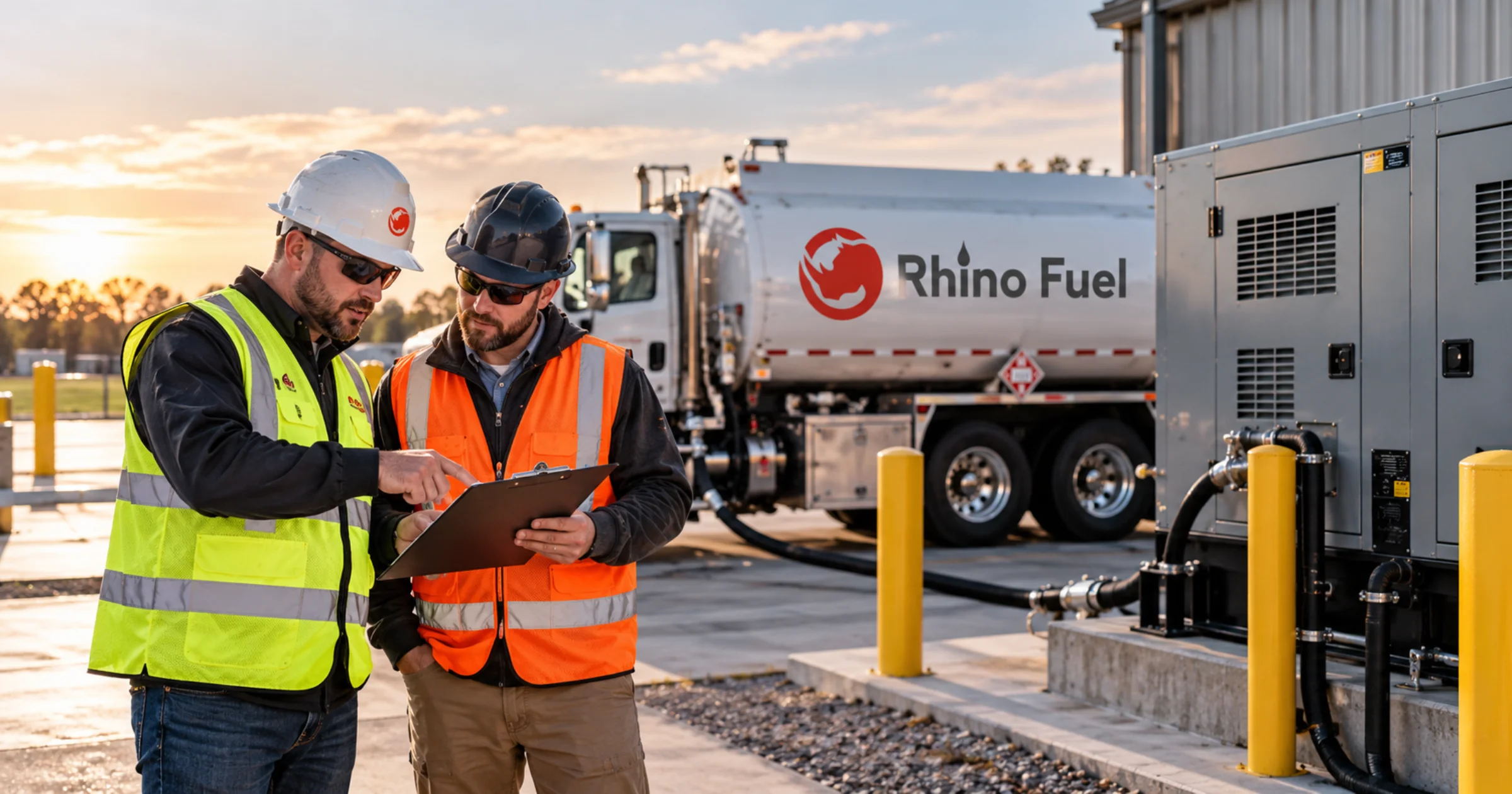
To hire a generator fuel provider, start by writing down your generator’s fuel needs, tank capacity, and delivery requirements. Compare suppliers on coverage, delivery capacity, total cost, emergency availability, and contract terms. Before you sign, confirm that the supplier can reach your site, test it with a trial delivery, and agree on a fuel supply plan in writing.
Pick a generator fuel supplier on the lowest quote alone and you can end up with a truck that cannot reach your tank, a supplier that goes quiet in a storm, or a contract that hides fees. A backup generator can pass every test and still leave you in the dark if the fuel does not show up. Evaluate suppliers before you need fuel urgently. Here is the process, step by step.
Key Takeaways
- Document generator fuel requirements, tank capacity and delivery needs before contacting suppliers.
- Compare fuel providers based on service coverage, delivery capacity, availability and site compatibility.
- Evaluate total fuel delivery costs, including transportation fees, minimum orders and additional charges.
- Confirm emergency delivery procedures, response expectations and contract terms before hiring a provider.
- Schedule an initial delivery to assess communication, delivery accuracy and overall service reliability.
What Should You Know Before Hiring a Generator Fuel Provider?
Know Your Generator’s Fuel Requirements
- Fuel type and consumption rate
- Tank capacity and usable fuel
- Expected operating hours
- Required backup runtime
- How often you will need to refuel
Identify Your Delivery Requirements
- Number and location of generators
- Tank access and delivery restrictions
- Scheduled vs. emergency refueling
- Delivery frequency and estimated quantities
The U.S. Department of Energy’s emergency planning guidance for local leaders advises identifying backup power sources, making sure backup generators are tested and in working condition, and reviewing your existing energy supply contracts, including how and when supplies are delivered, at what cost, and whether the contract covers emergencies. That is a good frame for any business.
Step 1: Build a Generator Fuel Delivery Requirements Sheet
Put your requirements on one page you can send to every supplier. A consistent sheet makes proposals easier to compare.
| Requirement | Information to provide |
| Fuel type | Diesel grade and specifications |
| Generator details | Model and rated capacity |
| Tank capacity | Total and usable gallons |
| Delivery volume | Estimated gallons per order |
| Delivery frequency | Weekly, monthly, or as needed |
| Site access | Gate, truck, and fill-point requirements |
| Emergency needs | Required operating duration and contingency arrangements |
| Site contact | Primary and backup contacts |
Step 2: Shortlist Providers Based on Actual Delivery Coverage
An advertised service area is not the same as confirmed coverage at your address.
Confirm Service Availability at Your Location
Check that the supplier serves your exact address. Ask about rural or remote restrictions. Confirm standard delivery windows and lead times.
Check Coverage Across Multiple Facilities
If you have several sites, ask how the supplier handles each region, and who answers for the whole account. Rhino Fuel services every city and metro in Texas, Arizona, Colorado, Oklahoma, and Nevada, with consolidated billing for multi-location customers. If your site is outside those states, call and we will tell you whether we can fill it.
Stop overpaying at the pump.
Get a wholesale quote for your operation, or talk to a fuel specialist who can walk you through it.
Step 3: Check Whether the Provider Can Meet Your Fuel Demand
Look past the general service claims. Ask about minimum and maximum delivery quantities, fuel products and specifications, scheduled delivery availability, capacity during high demand, order lead times, and what happens when a delivery is delayed.
A supplier can be fine for routine refueling and still fall short during a long outage. Evaluate those two situations separately and ask the supplier to address both.
Step 4: Compare the Real Cost of Generator Fuel Delivery
Identify Every Cost Included in the Quote
Compare fuel delivery costs using an itemized quote that lists the fuel price, delivery charge, minimum-order fees, and any after-hours, emergency, or order-specific charges. Because bulk fuel prices fluctuate, request quotes for the same fuel type, volume, and delivery schedule within a comparable pricing window. Rhino Fuel bases its pricing on wholesale rates plus a delivery fee that reflects location, volume, and frequency.
Calculate the Effective Delivered Cost Per Gallon
Effective delivered cost per gallon = total invoice cost ÷ gallons delivered
This comparison is hypothetical, for illustration only:
| Supplier A | Supplier B | |
| Fuel (500 gal) | $1,750 | $1,800 |
| Delivery charge | $200 | $50 |
| Total | $1,950 | $1,850 |
| Effective cost per gallon | $3.90 | $3.70 |
Supplier A has the lower fuel price and the higher effective cost. Still, the lowest effective cost may not be the best choice if that supplier cannot meet your delivery requirements.
Step 5: Test the Provider’s Emergency Delivery Plan
Ask What Happens When Multiple Customers Need Fuel
In a regional outage, everyone calls at once. Ask how the supplier prioritizes orders, what its limits are, and whether you get any priority arrangement. No supplier can truthfully promise an arrival time in a widespread emergency.
Confirm the Emergency Escalation Process
Get the after-hours phone number, the person to escalate to, and what information they need from you. Rhino Fuel is available 24/7, including emergencies.
Here is a short scenario. A commercial facility loses power in a regional storm. Its generator has about 18 hours of fuel. The facility manager has to answer three things in the first hour: who do we call, what do they need from us, and how long until a truck can realistically arrive? A buyer who settled those questions during supplier selection is calling a known number with the tank details ready. One who did not is searching the internet.
Step 6: Review Delivery Safety, Equipment, and Site Compatibility
Confirm truck access and maneuvering room, fill connections and hose requirements, delivery equipment, driver qualifications where they apply, spill response procedures, insurance documentation, site security, and delivery paperwork. Suppliers and facility operators carry different responsibilities. Do not assume a supplier’s practices satisfy every rule that applies to your site. Check what regulations apply with your own professionals.
Step 7: Review the Fuel Delivery Agreement Before Signing
Confirm the Commercial Terms
Pricing, fees, minimums, payment terms, how pricing changes, and how long the agreement runs. Rhino Fuel does not require a long-term contract.
Confirm the Operational Terms
Delivery windows, notice required, emergency procedures, escalation contacts, reporting, and who is responsible for what at the site.
Contract red flags:
- Surcharges that are unclear or not defined
- No written service expectations
- Emergency procedures that are not documented
- Terms you cannot get in writing
Step 8: Schedule a Trial Delivery Before Relying on the Provider
Most supplier guides skip this. A first scheduled delivery tells you things a sales call cannot. Check:
- Did the truck arrive in the agreed window?
- Were your site instructions accurate?
- Could the driver reach the right tank?
- How was communication with your team?
- Was the product and quantity right?
- Were the records and invoice accurate?
- How did they handle anything unexpected?
A good first delivery does not guarantee later performance. It does show you what needs fixing before an outage.
Step 9: Establish a Generator Fuel Supply Plan With Your Provider
When arranging Rhino Fuel’s generator refueling services, agree on routine delivery schedules, site-specific refill triggers, monitoring and approval responsibilities, emergency procedures, reporting, and service reviews. Multi-site businesses should give each location its own fuel profile and delivery instructions. Rhino Fuel provides delivery reporting and fuel usage visibility; confirm which records your team will receive and how they will support those reviews.
How Do You Know You’ve Chosen the Right Generator Fuel Provider?
| Evaluation criteria | What to confirm |
| Service coverage | All required locations are supported |
| Fuel availability | Required fuel and volumes can be supplied |
| Delivery reliability | Lead times and communication procedures are documented |
| Emergency support | Emergency ordering and escalation procedures are clear |
| Pricing transparency | All applicable fees are explained |
| Site compatibility | Delivery equipment and access requirements are confirmed |
| Initial delivery | Trial delivery performance is acceptable |
If you can check every row, you have a supplier worth keeping.
Frequently Asked Questions
generator fuel contract
How do you hire a generator fuel provider?
Define your requirements, shortlist suppliers with confirmed coverage at your site, compare total delivered cost and emergency plans, review the agreement, and run a trial delivery.
What should you ask a generator fuel provider?
Coverage at your address, minimum and maximum quantities, lead times, fee structure, emergency procedures, escalation contacts, and what records you receive.
What should a generator fuel delivery contract include?
Defined pricing and fees, delivery and emergency procedures, notice requirements, site responsibilities, and reporting.
Can a fuel provider handle emergency deliveries?
Many can, but timing depends on capacity, location, and conditions. Get the process in writing.
Prepare Your Generator Fuel Supply Before the Next Outage
Before arranging fuel delivery for your facility, organize your generator’s fuel requirements, site access instructions, and preferred refueling schedule. Use those details to request generator fuel delivery from Rhino Fuel, or call 866-667-1273 to discuss your setup. We deliver diesel on demand or on a schedule, with 24/7 availability including emergencies.